
NEW: Please subscribe to my Substack/newsletter at the bottom of the page. Thanks!
Moadim (Holy Days)
God’s Appointed Times[1]
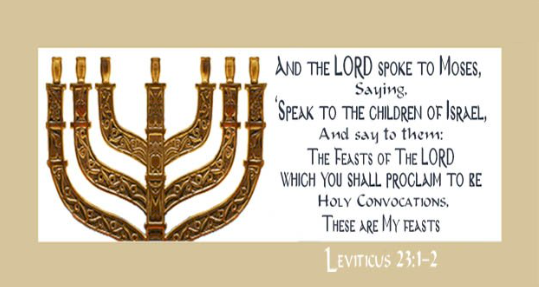
The Moadim: God’s Appointed Times
Click the image to view full page

 Watch the “Explainer” (8 minutes) |
||
 Take a “Deep Dive” into Take a “Deep Dive” intothis section (36 minutes) |
||
[This section of][2] the Center for Messianic Learning advocate[s] for a Torah-observant understanding of faith, arguing that modern Christianity has abandoned biblical mandates in favor of pagan traditions. The author asserts that Yeshua was actually born during the Feast of Sukkot in autumn and provides a revised crucifixion timeline to satisfy the “Sign of Jonah” by documenting a full seventy-two hours in the grave. By analyzing priestly cycles and Hebrew festivals, the text challenges traditional holidays like Christmas and Easter, labeling them as carryovers from Roman polytheism. Additionally, the writings criticize the Catholic Mass as a departure from the completed sacrifice of the Messiah described in the New Covenant. Ultimately, the collection encourages believers to return to the Moadim, or God’s appointed times, as the only legitimate schedule for worship.
The Moadim (God’s Appointed Times) serve as a comprehensive prophetic template for the life and mission of the Messiah, functioning as a “shadow” of his atoning work and literal milestones for his earthly ministry. These festivals are not merely historical memorials but are “permanent regulations” designed by God to align with specific events in the Messiah’s life, from his conception to his resurrection.
The Template for the Messiah’s Birth (Sukkot)
According to the sources, the Feast of Tabernacles (Sukkot) is the actual date of the Messiah’s birth, rather than traditional winter dates.
• Literal Tabernacling: The Gospel of John records that “the Word became flesh and tabernacled among us,” using the Greek word skenoo, which refers to living in a temporary dwelling or booth.
• The Sukkah and the Manger: Yeshua was born on 15 Tishrei, the first day of Sukkot, and laid in a “manger,” which the sources identify as a food tray (phatne) attached to the wall of a Sukkah.
• Eight-Day Fulfillment: The birth cycle was completed on the eighth day of the feast, Shemini Atzeret (22 Tishrei), when Yeshua was circumcised in accordance with the Torah, signifying that his birth spanned the entire eight-day holy season.
The Template for the Messiah’s Death (Pesach)
Yeshua’s death was timed to the exact minute to fulfill the prophetic requirements of Pesach (Passover) as the Ultimate Paschal Lamb.
• The Inspection of the Lamb: Torah required the paschal lamb to be taken into the house on 10 Nisan for examination. Prophetically, Yeshua entered the Temple (referred to as his “Father‘s House’) on 10 Nisan and was examined for spiritual “defects” by religious authorities until the 14th of Nisan.
• The Sacrifice: To fulfill the template, Messiah had to die at the same time the Passover lamb was sacrificed. Yeshua died at 3:00 p.m. on 14 Nisan, the precise hour the paschal sacrifices began in the Temple.
The Template for the Burial (Unleavened Bread)
The Messiah’s burial aligns with the start of Motzi (Unleavened Bread) and the “Sign of Jonah.”
• High Shabbat Burial: Yeshua was buried just before sunset at the end of 14 Nisan, as the 15th of Nisan (a high Shabbat and the first day of Unleavened Bread) was beginning.
• 72-Hour Sign: He fulfilled the Sign of Jonah by remaining “in the heart of the earth” for a literal three days and three nights (72 hours), a timeframe that is mathematically impossible under traditional Friday-to-Sunday chronologies but is resolved by the Hebrew calendar’s Sabbath structure.
The Template for the Resurrection (First Fruits)
The resurrection of the Messiah occurred on the Day of First Fruits (Yom HaBikkurim), serving as the prophetic “first sheaf” of the resurrection harvest.
• Prophetic Timing: The sources state the resurrection occurred approximately 72 hours after burial, at the start of the first day of the week (18 Nisan), which is the biblical day for the waving of the first fruits of the barley harvest.
• Firstfruits of the Dead: By rising on this specific day, Yeshua became the literal fulfillment of the First Fruits offering described in Leviticus 23.
The Template for the Forerunner (Yochanan on Pesach)
The life of Yochanan the Immerser (John the Baptist) also follows a prophetic template to prepare the way for the Messiah.
• Passover Birth: Based on the service rotation of the Aaronic priesthood (the division of Aviyah), Yochanan was born on 15 Nisan, the first day of Passover/Unleavened Bread.
• Expectation of Elijah: This fulfilled the Jewish expectation that Eliyahu (Elijah) would return during Passover to prepare the hearts of the people before the Mashiach’s arrival.
1. Note that these are not “the Feasts of the Jews;” they are “the Feasts of the LORD” and they are for ALL of God’s people. Image “borrowed” from Beth Yeshua International, Macon, Georgia. [BACK]
2. Except for changing “These sources from” to “[This section of]” this page contains the reformatted but unedited content from NotebookLM. [BACK]
|
 |
Subscribe to my Substack/newsletter |

ANXIOUSLY WATCHING FOR MASHIACH’S RETURN,
SPEEDILY AND IN OUR DAY. MARANA, TA!


