If your life is not in jeopardy for what you
believe, you’re probably on the wrong side!
Like this page?
 Share it.
Please read
the Introductory Notes to this commentary.
GLOSSARY •
PRONUNCIATION GUIDE
כָּתָבּ הָעִבּרִים֙
Ketab ha Ivrim
(The Letter to the Hebrews)
(a.k.a. “Messianic Jews”)
Fair Use
Notice: Under the provisions of 17USC107
(the 1976 Copyright Act), allowance is made for “fair use” of copyrighted materials for
purposes such as criticism, comment, news reporting, teaching, scholarship and research.
This article is reproduced here without the permission of the author only for the
purpose of education (teaching/scholarship). If you are the copyright owner and want
this article removed, please contact me
and I will immediately remove it. [Inclusion of this content does not necessarily
indicate that I agree with the content or the author.]
Mirrored from
www.bethimmanuel.org/audio-series/holy-epistle-to-the-hebrews
Kind permission to share these messages is granted by the announcer at the beginning
of each message.
The teacher is Messianic Pastor Daniel Thomas Lancaster of
Beth Immanuel Messianic Synagogue,
828 3rd St. Hudson, WI.
He is also Director of Education at
First Fruits of Zion, editor of
Messiah Magazine,
and author of the
Torah Club commentaries and several books and study programs.
Here is Daniel Lancaster on the Messiah Podcast discussing
his new commentary on the Epistle to the Hebrews
Audio Series: Holy Epistle to the Hebrews
1Fire
on the MountainRecorded 12/29/2012
Is the God of the New
Covenant a lot friendlier
than the God of the Old
Covenant? Conventional
Christian teaching depicts
the revelation of New
Covenant in terms that
contradict the image of a
stern and fearsome God
speaking from Mount Sinai.
Was that the intention
behind the comparison
between Mount Sinai and
Mount Zion in Hebrews 12?
For you have not come to
what may be touched, a
blazing fire and
darkness and gloom and a
tempest and the sound of
a trumpet and a voice
whose words made the
hearers beg that no
further messages be
spoken to them ... but
you have come to Mount
Zion and to the city of
the living God, the
heavenly Jerusalem, and
to innumerable angels in
festal gathering, and to
the assembly of the
firstborn who are
enrolled in heaven, and
to God, the judge of
all, and to the spirits
of the righteous made
perfect, and to Jesus,
the mediator of a new
covenant, and to the
sprinkled blood that
speaks a better word
than the blood of Abel."
(Hebrews 12:18-24)
2A
Word of ExhortationRecorded 01/05/2013
Who wrote the Epistle to the
Hebrews and who were those
Hebrews to whom the epistle
was sent? Why did the early
church nearly exclude
Hebrews from the canon. This
teaching provides a quick
introduction to the book of
Hebrews addressing the
questions of what, who, to
whom, when, where, and why.
We look for clues in
introduction and
subscription of the epistle
and we speculate about the
possible authorship of the
epistle, the intended
audience, the occasion that
might have inspired its the
composition, and the overall
genre of the piece.
I appeal to you,
brothers, bear with my
word of exhortation, for
I have written to you
briefly. (Hebrews
13:22)
Until I come, devote
yourself to the public
reading of Scripture, to
exhortation, to
teaching. (1 Timothy
4:13)
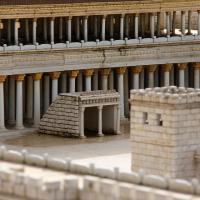
3Solomon's
PorchRecorded 01/12/2013
Where did the first
Christians go to church? Our
third teaching on the book
of Hebrews takes a look at
the Jewish believers and
their relationship to the
Temple and Levitical worship
system in the first century
and looks for the possible
occasion that inspired the
writing of the epistle.
Learn about the sacred place
of assembly where the
Jerusalem community of
disciples used to gather
daily for prayer.
And they were all
together in Solomon's
Portico. (Act 5:12)
4Sundry
Times and Divers MannersRecorded 01/19/2013
How does Yeshua and the
message of Messiah stack up
against the patriarchs and
the prophets? Our fourth
teaching on the book of
Hebrews considers the first
two verses of the epistle:
God, who at sundry times
and in divers manners
spake in time past unto
the fathers by the
prophets, hath in these
last days spoken unto us
by his Son. (Hebrews
1:1-2).
This teaching identifies the
thesis statement behind the
book of Hebrews with
reference to Yalkut
Shimoni and Midrash
Tanchuma on
Isaiah 52:13.
Behold, my servant shall
act wisely; he shall be
high and lifted up, and
shall be exalte (Isaiah
52:13)
5Radiance
of GloryRecorded 01/26/2013
What role in the creation of
all things did the Son play?
From where did the apostles
derive their high view of
Messiah in His divinity?
This teaching explores early
apsotolic mysticism. Take a
quick immersion into the
Christology of the apostles
and the writer of the book
of Hebrews based on the
prologue to the book of
Hebrews.
...His Son, whom he
appointed the heir of
all things, through whom
also he created the
world. He is the
radiance of the glory of
God and the exact
imprint of his nature
(Hebrews 1:2-3).
radiance_of_glory.mp3
6Ten
TestimoniesRecorded 02/02/2013
In the first two chapters of
the Epistle to the Hebrews,
the writer of the epistle
employs ten proof texts
drawn from the Torah, the
Prophets, and the Writings
to make his case that
Messiah is more exalted than
angels. In this teaching, D.
Thomas Lancaster connects
the dots between the ten
passages to reveal the
larger message.
A fast-paced, crash course
weaving all over the Bible
as we follow an apostolic
midrash. This is a fun
exploration of New Testament
Era methods of Bible
interpretation.
Now it was not to angels
that God subjected the
world to come, of which
we are speaking.
(Hebrews 2:5)
ten_testimonies.mp3
7Spoken
by AngelsRecorded 02/09/2013
The writer of the book of
Hebrews indicates that the
Torah was spoken by angels.
In this teaching, D. Thomas
Lancaster takes a look at
first-century angelology to
understand the apostolic
concept of the Torah being
delivered by angels and what
role that concept plays in
the argument in Hebrews 2.
Therefore we must pay
much closer attention to
what we have heard, lest
we drift away from it.
For since the message
declared by angels
proved to be reliable,
and every transgression
or disobedience received
a just retribution,how
shall we escape if we
neglect such a great
salvation? It was
declared at first by the
Lord, and it was
attested to us by those
who heard, (Hebrews
2:1-3)
spoken_by_angels.mp3
8The
PartisansRecorded 02/16/2013
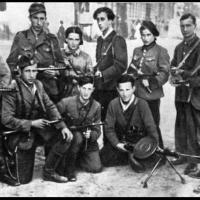
The kingdom of heaven prior
to the final redemption can
be likened to a partisan
movement, such as Robin Hood
and his men or the European
freedom fighters that fought
in Nazi occupied territory.
The Partisans is a teaching
on Hebrews 2 in light of
Psalm 8 and the parable of
the ten minas in Luke 19
concerning all things in
subjection to the Son and
the revelation of the
kingdom.
We have this common
goal, this common
purpose. We have
received the dispatch.
The king is on the
throne, and he is on the
way here. If we will be
loyal to him now, we are
part of his kingdom. But
he has not yet arrived.
There is another king on
the throne, who holds
the power of death, and
we are the resistance
movement, loyal to the
incoming king because we
know that, even though
this enemy and
pretender, this
contender for the throne
still holds power, his
rule is over, he has
lost his authority, and
his time is quickly
coming to an end.
the_partisans.mp3
9The
Family of GodRecorded 03/02/2013
Moses was faithful in all
God's house as a servant,
but the Messiah has the
status of Son over the
household. Hebrews 3:1-6
contrasts and compares the
respective stations of Moses
and Messiah in the household
of God. This teaching
considers the familial
language the Yeshua and the
apostles applied to the
believers, and it discusses
the concept of family
loyalty and our obligations
to one another within the
body of Messiah.
How do we know that the
Messiah will be more
worthy of honor than
Moses? The Holy One
Blessed be He spoke of
Moses saying, “My
servant Moses is
faithful in all my
house,” but He spoke
regarding the Son of
David saying, “He shall
build a house for me,
and I will establish his
throne forever. I will
be to him a father, and
he shall be to me a
son.” Now who is
greater, the servant
over the household, or
the Son of the
household? Surely the
Son is more worthy of
honor than the Servant.
Now the builder of the
household has more honor
than the household, just
as the Creator has more
honor than the creation.
So the Son has more
honor than the servant.
family_of_god.mp3
10Enter
My RestRecorded 03/09/2013
Three possible
interpretations of Psalm
95:11 prepare us for
understanding the discussion
in Hebrews 3:7ff regarding
the generation in the
wilderness that did not
enter into God's rest. An
important preface to the
Sabbath discussion of
Hebrews 4.
Psalm 95:11 says, "Therefore
I swore in my wrath, 'They
shall not enter my rest.'"
The Book of Hebrews quotes
this verse and interprets it
in three possible
directions:
- Interpretation ONE
of of Psalm 95:11: “They
shall not enter my
Sabbath Rest.
- Interpretation TWO
of Psalm 95:11: “They
shall not enter the
Promsied Land.”
- Interpretation THREE
of Psalm 95:11: “They
shall not enter the
kingdom or the world to
come.”
enter_my_rest.mp3
11A
Sabbath Rest RemainsRecorded 03/16/2013
The Sabbath represents the
Messianic Era and the menuchah of
the world to come. In
Hebrews 3:7-4:11, the writer
of the holy Epistle to the
Hebrews compares this
present world to the work
week of preparation, and he
warns us to prepare
ourselves now for the
Kingdom and the World to
Come. This important message
demonstrates that Hebrews 4
should not be used to
justify a spiritual
interpretation of the
Sabbath that makes actual
Sabbath observance
obsolete.
a_sabbath_still_remains.mp3
12The
Book and the SwordRecorded 04/06/2013
Does it ever seem like God
is far away, distant,
doesn’t hear your prayers;
you don’t feel his presence;
you can’t see him, and you
don’t experience him? That's
because we are on the wrong
side of the sword that
closes the way to Eden.
Hebrews 4:11-16 speaks of a
fearsome sword that divides
soul and spirit, joint and
marrow, and reveals the
inner intentions of the
heart. Discover the edenic
background to the
double-edged sword of the
book of Hebrews and the Way
to the tree of life.
the_sword_and_the_book.mp3
13The
Messiah PsalmRecorded 04/13/2013
Psalm 110 is the most
frequently quoted text in
the New Testament. Why? And
what did Yeshua mean when he
quoted it to challenge the
concept of a Davidic
Messiah?
David himself, in the
Holy Spirit, declared,
'The Lord said to my
Lord, Sit at my right
hand, until I put your
enemies under your
feet.' David himself
calls him Lord. So how
is he his son?
(Mar 12:36-37)
Listen to a study of Hebrews
4:14-5:6 which unwraps Psalm
110 and introduces the
priesthood of Messiah. The
Messiah Psalm offers
discussion about the
Messianic interpretation of
Psalm 110 as it appears in
the teaching of Yeshua (Mark
12) and the Epistle of
Hebrews.
messiah_psalm.mp3
14The
Source of Eternal SalvationRecorded 04/20/2013
The rabbis believe that
Psalm 2 is about the
Messiah. The apostles
believed that Psalm 110 is
about Yeshua. Find out how
the two psalms intersect,
and follow the apostolic
logic to discover how the
writer of the book of
Hebrews derived the
priesthood of Messiah. This
teaching comes with a stern
call to discipleship. Covers
Hebrews 5:5-10 and includes
a downloadable pdf file of
the two psalms.
source_of_eternal_salvation.mp3
15Six
FoundationsRecorded 04/27/2013
What are the fundamentals?
Discover the six basic
teachings of Messianic faith
from Hebrews 5:11-6:3. This
sermon presents an
introduction and overview
of:
... repentance from dead
works and of faith
toward God, and of
instruction about
washings, the laying on
of hands, the
resurrection of the
dead, and eternal
judgment. (Hebrews
6:1-2).
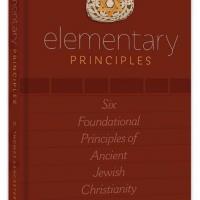
This is the sermon that
sidetracked us into a series
which eventually became the
book Elementary
Principles.
six_foundations.mp3
16Things
that Belong to SalvationRecorded 05/04/2013
Do we have eternal security
or eternal insecurity? Do
apostates lose their
eligibility for the world to
come? A few verses in
Hebrews 6 have been a
theological battleground for
these questions since the
earliest days of
Christianity.
The things that belong to
salvation include the gift
of the Spirit, the goodness
of the word of God, and the
power of the age to come.
This sermon deals with the
difficult and controversial
material in Hebrews 6:4-12.
For in the case of those
who have once been
enlightened and have
tasted of the heavenly
gift and have been made
partakers of the Holy
Spirit, and have tasted
the good word of God and
the powers of the age to
come, and then have
fallen away, it is
impossible to renew them
again to repentance,
since they again crucify
to themselves the Son of
God and put Him to open
shame. (Hebrews 6:4-6)
One for the black
bird, one for the crow,
one for the cutworm, and
one to grow.
things_that_belong_to_salvation.mp3
17The
Evangelical GospelRecorded 05/25/2013
The Evangelical Gospel can
be reduced to "Jesus died to
save you from your sins.
Believe in him for the
forgiveness of sins and you
will go to heaven when you
die." This sermon introduces
the Six
Elementary Teachings of
Messiah with
a look at Evangelicalism,
our Evangelical roots, and
the problems with the
Evangelical Gospel, citing
Scot McKnight's book The
King Jesus Gospel.
Therefore let us leave
the elementary doctrine
of Christ and go on to
maturity, not laying
again a foundation of
repentance from dead
works and of faith
toward God, and of
instruction about
washings, the laying on
of hands, the
resurrection of the
dead, and eternal
judgment. And this we
will do if God
permits. (Hebrews 6:1-3)
the_evangelical_gospel.mp3
18Repentance
from Dead WorksRecorded 06/01/2013
Are "dead works" the "works
of the Law"? Does the book
of Hebrews tell us to repent
from Torah observance when
it speaks of "repentance
from dead works."
What are the basic teachings
of Messiah mentioned in
Hebrews 6:1-3? Discover the
meaning of repentance from
dead works in this
eighteenth installment of
sermons on the epistle to
the Hebrews.
Therefore let us leave the
elementary doctrine of
Christ and go on to
maturity, not laying again a
foundation of repentance
from dead works and of faith
toward God, and of
instruction about washings,
the laying on of hands, the
resurrection of the dead,
and eternal judgment. And
this we will do if God
permits. (Hebrews 6:1-3)
repentance_from_dead_works.mp3
19Repentance
from Dead Works IIRecorded 06/08/2013
Does repentance mean to
change your mind or to turn
from sin?
More thoughts on repentance
from dead works as an
essential part of the gospel
and one of the elementary
teachings of Yeshua.
Evangelism is not like
making toast. Discipleship
and evangelism entail an
ongoing process. This
teaching includes excerpts
from a blog in
which an Evangelical pastor
explains why he does not
preach repentance.
repentance_from_dead_works_ii.mp3
20Faith
toward GodRecorded 06/15/2013
The second elementary
teaching of
the Messiah in Hebrews 6:12
is called faith toward God,
but how does “faith towards
God” function as a
distinctive, unique,
hallmark of first century
Messianic Judaism? All sects
of Judaism believed in God.
Even the Sadducees believed
in God. Find out how Yeshua
transformed the faith of his
followers, and get a fresh
handle on what it means to
believe in Jesus and to be
born again. This teaching
includes a discussion on the
relationship between
Messianic Judaism and the
rest of the Jewish people in
the form of the parable of
the man with two daughters.
faith_toward_god.mp3
21Instructions
About WashingsRecorded 06/22/2013
Hebrews 6:1-3 identifies
instructions about washings
as one out of six
fundamental, elementary
teachings about
the Messiah. Does this refer
to baptism? Are these
instructions about how to
baptize? Learn about the
Jewish practice of immersion
in a mikvah and discover
evidence of early,
apostolic-era
catechism prior to
immersion. This teaching
ncludes a short
introduction to the
Didache.
instructions_about_washings.mp3
22Laying
on of HandsRecorded 06/29/2013
Why do we "lay hands" on the
sick? What does the ceremony
of laying on of hands
actually mean?
The writer of the book of
Hebrews lists the laying on
of hands as one of the elementary
teachings of
the Messiah. What is the
laying on of hands and what
did it signify to the early
believers? Listen to a
rapidly moving Bible study
on the subject of semichahin
the apostolic era.
laying_on_of_hands.mp3
23The
InitiationRecorded 07/06/2013
The elementary
principles include
the subject of baptism and
instructions regarding
immersions. In this
teaching, we look at the
evidence from early
Christian documents. Find
out how the second-century
Christians welcomed new
converts into the body of
Messiah. This teaching
contains quotations from
Justin Martyr's First
Apology, from the Didache,
and from the Apostolic
Constitutions. The
quotations are available in
the PDF document below
titled Initiation Texts.
the_initiation.mp3
24Our
Hope is not in HeavenRecorded 07/27/2013
The Evangelical gospel asks,
"Are you certain you are
going to go to heaven when
you die?" The Christian
objective seems to be to
secure a place in heaven,
but the Bible says very
little about heaven. Find
out why most passages about
heaven are actually not
about heaven at all in this
installment on the basic
teachings of the Messiah from
Hebrews 6.
our_hope_is_not_in_heaven.mp3
25The
Resurrection of the DeadRecorded 08/03/2013
What's the difference
between the resurrection and
going to heaven?
According to Hebrews 6:1-2,
the resurrection of the dead
is one of the six basic
doctrines of Messianic
faith. In this teaching, D.
Thomas Lancaster takes a
look at the apostolic hope
in the resurrection,
distinguishing between the
resurrection of the
righteous and the general
resurrection. This is
teaching number 25 in the
Hebrews series and number 10
in special series on the elementary
teachings of the Messiah.
the_resurrection_of_the_dead.mp3
26The
Final JudgmentRecorded 08/10/2013
After the resurrection of
the dead comes the final
judgment. According to
Hebrews 6, the eternal
judgment is one of the elementary
principles of
the Messiah, yet it is
poorly understood among
believers today. This
teaching provides a quick
synopsis of the subject.
The Final Judgment is a
re-recording of a talk
originally delivered on
Shabbat Shoftim, Elul 4,
5773 corresponding to August
10 in the year of our Master
2013. This is the 26th
installment in our studies
in the book of Hebrews and
the final installment in our
special study of elementary
teachings of
the Messiah in Hebrews 6.
the_final_judgment.mp3
27Melchizedek
Was Melchizedek actually a
pre-incarnate appearance of
Christ in the Old Testament?
Who is the mysterious priest
and what is his relationship
to Yeshua? This teaching
retells the story of
Abraham's encounter with
Melchizedek and discusses
the role of Melchizedek in
Hebrews 7:1-17.
melchizedek.mp3
28The
BypassRecorded 10/26/2013
What does it mean that "the
former commandment has been
set aside" (Hebrews 7:18)?
Does the priesthood of
Messiah cancel the
priesthood of Aaron and the
Levitical system? This
teaching explores the
relationship between two
different priesthoods in
Hebrews 7:18-28, the Aaronic
priesthood and the
Melchizedekian priesthood.
The Aaronic priesthood
was never in business to
conduct souls to heaven
or to attain eternal
forgiveness and
justification for
sinners. That was not
their job. Their job was
to facilitate the
worship of Hashem in the
holy Sanctuary, to
conduct the sacrificial
services, to carry the
blood of sacrifices to
the altar, and to bestow
Hashem’s blessing upon
the worshippers and upon
the nation. Getting
people into heaven and
raising them from the
dead was not in the job
description.
the_bypass.mp3
29Shadow
and a CopyRecorded 11/02/2013
Is the Temple on earth
irrelevant since it is
merely a shadow of the true
heavenly reality?
This teaching on Hebrews
8:1-5 explains the Temple as
a Shadow and a Copy of the
supernal Temple above with
references to Colossians
2:16-17 which describes the
festivals and holy days as
shadows of things that are
to come — the substance of
Messiah.
shadow_and_copy.mp3
30The
New CovenantRecorded 11/09/2013
Discussion on Hebrews 8 and
Jeremiah 31 regarding the
New Covenant and its meaning
from a Messianic Jewish
perspective. Discover why
the New Covenant is not the
New Testament, the Renewed
Covenant, nor the Brit
Chadashah. Find out what the
New Covenant really is and
how the Torah is part of the
New Covenant. A foundational
teaching for everyone
interested in Messianic
Judaism and the role of
Torah in the lives of
disciples of Yeshua.
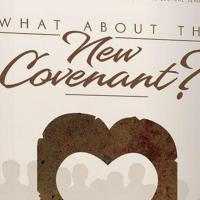
This sermon became one of
the primary lectures in the
First Fruits of Zion
audio-teaching What
About the New Covenant?
new_covenant.mp3
31The
Inner TorahRecorded 11/16/2013
What is the differences
between the Letter of the
Law and the Spirit of the
Law in Pauline terminology?
This teaching discusses the
promise in Jeremiah 31
regarding the Torah written
on our hearts in the New
Covenant, with reference to
Paul's discourse in Romans
7-8 regarding the Spirit and
the Law. A foundational
teaching for everyone
interested in Messianic
Judaism and the role of
Torah in the lives of
disciples of Yeshua. This
sermon became one of the
primary lectures in the
First Fruits of Zion
audio-teaching What
About the New Covenant?
the_inner_torah.mp3
32Better
PromisesRecorded 11/23/2013
Does the New Covenant really
have better promises than
the old? What are the better
promises? How well do you
really know the new
covenant?
The book of Hebrews says
that the Messiah has
obtained a more excellent
priesthood than the Aaronic
priesthood because he is the
mediator of a better
covenant, which has been
enacted on better promises
(Hebrews 8:6). This
discourse takes a closer
look at the better promises
of the new covenant as
described in the prophecies
of Jeremiah.
This lecture later became
part of the First Fruits of
Zion audio-teaching What
About the New Covenant?
better_promises.mp3
33Glory
to GloryRecorded 12/07/2013
In 2 Corinthians 3 Paul
teaches a short discourse
contrasting the glory of the
Old Covenant and the glory
of the New Covenant,
employing the metaphor of
the veil that concealed the
light of Moses' face. This
passage is frequently
understood to imply
replacement theology the
cancellation of the Torah,
but a closer look reveals a
the role of the Torah in
both old and new covenants.
But if the ministry of
death, in letters
engraved on stones, came
with glory, so that the
sons of Israel could not
look intently at the
face of Moses because of
the glory of his face,
fading as it was, how
will the ministry of the
Spirit fail to be even
more with glory?For if
the ministry of
condemnation has glory,
much more does the
ministry of
righteousness abound in
glory. For indeed what
had glory, in this case
has no glory because of
the glory that surpasses
it. For if that which
fades away was with
glory, much more that
which remains is in
glory. (2 Corinthians
3:7-11)
This lecture was included in
the First Fruits of Zion
audio-teaching What
About the New Covenant?
glory_to_glory.mp3
34Protos
and DeuterosRecorded 12/14/2013
Bible teachers often use
Hebrews 9 as proof that the
disciples of Yeshua
abandoned the Old Testament
rituals of Temple worship
and sacrifices as vestiges
of an old covenant that had
been replaced by a new
covenant. A closer look
reveals an entirely
different message. Hebrews 9
uses the layout of the
Temple to present a
mystical illustration of the
passage from this world to
the World to Come.
For more on sacrifices and
the New Testament, see the
First Fruits of Zion
audio-teaching What
About the New Covenant?.
protos_and_deuteros.mp3
35The
Blood of Bulls and GoatsRecorded 12/21/2013
What were the sacrifices
supposed to accomplish? The
writer of the book of
Hebrews maintains that the
animal sacrifices offered in
the Temple cannot grant
forgiveness for the world to
come or the reward of
eternal life. If so, why did
God command the Israelites
to offer sacrifices?
The contents of this
discussion contributed to
the First Fruits of Zion
audio-teaching What
About the Sacrifices?.
This sermon marks one year
in Beth Immanuel's study of
the epistle to the Hebrews,
so it features a brief
review of the first eight
chapters of the book.
the_blood_of_bulls_and_goats.mp3
36Mediator
of the New CovenantRecorded 12/28/2013
Anyone can pray, and God
knows the thoughts of every
creature. The difference
between this world and the
world of the divine is
artificial, and God pervades
all things, and all things
are in him, so why would
anyone need a mediator?
In the New Covenant, Yeshua
acts as priest, sacrifice,
and mediator.
Installment 36 in the Beth
Immanuel Hebrews series
finishes Hebrews chapter 9
with a discussion on Hebrews
9:15-28 and the Messiah's
role as a mediator between
Israel and God.
mediator_of_the_new_covenant.mp3
37A
Body You Have PreparedRecorded 01/04/2014
Do the sacrifices take away
sins or not? The Torah seems
to indicate that they do,
but the writer of the book
of Hebrews says, “It is
impossible for the blood of
bulls and goats to take away
sins.”
Dive into Hebrews 10 with an
entertaining, fast-paced
discussion of an apostolic
midrash on Psalm 40 and it's
appearance in the argument
regarding the suffering of
the Messiah as an atoning
sacrifice for sin.
a_body_you_have_prepared.mp3
38Single
Sacrifice for SinRecorded 01/11/2014
Hebrews 10:10-18 presents
the death of Yeshua of
Nazareth as the single
sacrifice for sin, but does
that make Yeshua a sin
offering like those once
offered in the Temple? In
what sense is Yeshua a
sacrifice? How can he be a
sacrifice when his death
does not accord with the
Levitical laws for the
sacrificial services
whatsoever? This teaching,
based on the final chapter
of Pastor Lancaster's
booklet What
about the Sacrifices? answers
the difficult question of
how the death of the Messiah
provides atonement for sin.
single_sacrifice_for_sin.mp3
39Full
Assurance of FaithRecorded 01/18/2014
I'm not perfect, just
forgiven. I'm not holier
than thou, I'm just a sinner
saved by grace. Something
has gone terribly wrong with
our thinking if we believe
that the only difference
between a believer and a
non-believer is that the
believer is forgiven and
assured of eternal life.
That idea is not worthy of
the name Christian or the
name of Messiah, and it
sullies the reputation of
our holy Master. Hebrews
10:18-31 contains a stern
warning and exhortation to
the upward call of
discipleship and the demands
of new-covenant living.
full_assurance_of_faith.mp3
40Ani
Ma'amin (I believe)Recorded 01/25/2014
What do Maimonides and the
book of Hebrews have in
common? Find out how the
Talmud and the book of
Hebrews intersect when it
comes to the question of
faith in Messiah.
The book of Hebrews
continues with a call to
hold fast to faith in the
coming of the Messiah.
ani_maamin_i_believe.mp3
41A
Great Cloud of WitnessesRecorded 02/01/2014
The Bible says we are
surrounded by a great cloud
of witnesses. Are the
biblical saints of old
watching us live our lives
like characters in a bad
reality TV show?
The writer of the book of
Hebrews refers to the
biblical saints as a great
cloud of witnesses. What
does that term imply?
a_great_cloud_of_witnesses.mp3
42MussarRecorded 02/15/2014
Nobody likes to be
disciplined, and nobody
enjoys discipline, but the
believer can have confidence
that all of life's
difficulties and hardships
are meant for good from the
hand of a loving father.
This discussion on Hebrews
12:5-12 introduces the
biblical concept of mussar,
godly discipline for the
sake of spiritual correction
and character refinement.
mussar.mp3
43The
Bitter RootRecorded 02/22/2014
The book of Hebrews warns us
against allowing a bitter
root to spring up in our
lives, but the bitter root
is probably not what you
think it is. The Talmud says
that one who says, "I will
sin now and repent later,
and sin again," is not
forgiven. Take a look in the
Torah to discover the real
meaning of the bitter root.
This teaching on Hebrews
12:11-29 challenges cheap
grace while encouraging us
to keep our eyes on the hope
of the kingdom.
the_bitter_root.mp3
45Outside
the CampRecorded 03/08/2014
Our religion involves a lot
of ritual foods, including
the ceremony that the Church
refers to as the Eucharist,
but the writer of the book
of Hebrews warns his readers
to steer away from
sacramental interpretations
of ceremonial foods. This
discussion of Hebrews
13:9-14 brings the central
conflict behind the epistle
into sharp focus
.
outside_the_camp.mp3
46Sacrifice
of PraiseRecorded 03/22/2014
How can we worship God
without the sacrifices? The
epistle of the Hebrews
points us to the text of
Hosea 14:2 to answer this
question, employing the same
proof text and arriving at
nearly the same conclusion
that the sages of Yavneh
offered after the
destruction of the Temple.
That prescient message
anticipated the coming exile
and offered Israel a
survival guide for the long
years ahead without
sacrifice, without priest,
and without temple.
sacrifice_of_praise.mp3
Page originally postedlast on Wednesday, 07 August 2024
Page last updated on
Tuesday, 16 September 2025 12:50 PM
(Updates are generally minor formatting or editorial changes.
Major content changes are identified as "Revisions”)

ANXIOUSLY WATCHING FOR MASHIACH’S RETURN,
SPEEDILY AND IN OUR DAY. MARANA, TA!