
NEW: Please subscribe to my Substack/newsletter at the bottom of the page. Thanks!
An Introduction to the |
Appprox reading time: 28 min |
Why is so much Hebrew vocabulary necessary?
Read about my paraphrase.
In This Section
Chronologies:
•
Crucifixion Week Chronology
• A 1-year
Harmony of the Gospels
• A 3-year Harmony of
the Gospels
The Good News of the Kingdom (the six “Gospel” messages):
1. The Good News of Yeshua, the Righteous King:
Mattityahu (Matthew)
2. The Good News of Yeshua, the Servant of God:
Mordichai (Mark)
3. The Good News of Yeshua, the Son of Man:
Lukas (Luke)
4. The Good News of Yeshua, the Son of God:
Yochanan (John)
5. The Good News of Yeshua, the One-Year Mission:
The Acts of the Emissaries
6. The Good News of Yeshua, the Coming Judge:
Yeshua’s Revelation to Yochanan
Passover and Yeshua’s Last Seder
Introductory Comments
The Greek word translated “gospel” is εὐαγγέλιον (euangelion)[1] and literally means “good news.” Thayer and Smith include the following definition in The NAS New Testament Greek Lexicon (1999):
The glad tidings of the kingdom of God soon to be set up, and subsequently also of Jesus the Messiah, the founder of this kingdom. After the death of Christ, the term comprises also the preaching of (concerning) Jesus Christ as having suffered death on the cross to procure eternal salvation for the men in the kingdom of God, but as restored to life and exalted to the right hand of God in heaven, thence to return in majesty to consummate the kingdom of God. (Emphasis added)
The Discovery Bible includes the following note:
Cognate: 2098 euaggélion – the Gospel – literally, “God’s good news.” See 2097 (euangelizō). The Gospel (2098 /euaggélion) includes the entire Bible, i.e. it is not limited to how a person becomes a Christian.
The Church has almost completely lost the original meaning as intended by the four Evangelists, that is, “the kingdom of God is now here,” and has concentrated only on the death, burial, and resurrection of “Jesus.”
Notice that Mattityahu (Matthew) uses the word in the phrase “Good News of (or about) the Kingdom” (Matthew 4:23, Matthew 9:35, Matthew 24:14), while Mordichai (Mark) uses “Good News of Yeshua the Messiah” (Mark 1:1) and “Good News from God” (Mark 1:14). In Mark 1:15 Mordichai uses the word in the context of the Kingdom: “The time has come, God's Kingdom is near! Turn to God from your sins and believe the Good News!” In Mark 10:24-34 Yeshua Himself uses it in the context of the Kingdom and the 'olam haba:[2]
The talmidim were astounded at these words; but Yeshua said to them again, “My friends, how hard it is to enter the Kingdom of God! It’s easier for a camel to pass through a needle’s eye than for a rich man to enter the Kingdom of God.” … Kefa began saying to him, “Look, we have left everything and followed you.” Yeshua said, “Yes! I tell you that there is no one who has left house, brothers, sisters, mother, father, children, or fields, for my sake and for the sake of the Good News, who will not receive a hundred times over, now, in the `olam hazeh, homes, brothers, sisters, mothers, children, and lands — with persecutions! — and in the `olam haba, eternal life.
Lucas also refers to it as “the Good News of the Kingdom of God” (Luke 16:16). In Acts 20:24 he speaks of “the Good News of God’s love and kindness” through which even the Gentiles may become citizens of the Kingdom of God, as does Rav Sha'ul[3] in Romans 1:1-6. In Romans 2:11-21 Rav Sha'ul suggests very strongly that “the Good News as I proclaim it” includes the time when God, through the Messiah, will judge all mankind by the Torah.
Yochanan the Immerser’s message was “Repent (turn away from sin and turn to God and His Torah), because the Kingdom of God is very near” (Matthew 3:2; cf Mark 1:4; Luke 3:3).
What is “the Kingdom of God?”
The Kingdom of Israel reached its pinnacle under Kings David and Solomon (ca. 1000-930 BCE). Under their leadership, Israel became a “world leader” in technology and commerce. National leaders came from far and wide to visit with David and Solomon and learn their secrets of successful governance. After the death of Solomon in about 928-930 BCE, the kingdom was divided into two nations: Israel in the north and Judah in the south.[4] Approximately 184 years later (ca. 740 BCE) the Assyrian empire invaded the northern kingdom of Israel and forcibly removed the people and scattered them throughout their empire.[5] In 597 BCE Judah was invaded by the Babylonian empire, lived in captivity in Babylon for 70 years (Jer. 25:11-12; Dan.9:2), and were allowed to return to their land, but under Babylonian rule. From 597 BCE until 1948 CE Israel lived continually under foreign rule.[6]
The prophets had promised that in their future a great leader, a descendant of King David, would arise who would free the people of Israel from the oppression of their overseers and restore the Kingdom of David to its former glory as the leader among nations. The prophets called him by several names, but mostly referred to him as the Mashiach (Messiah, the Anointed One) or the Son of Man. Since the prophets said that Mashiach would be a glorious King, ruling Israel from the throne of His ancestor David, and that He would also suffer and die for His people, the people of Israel assumed there would be two different Messiahs. The one that was to suffer and die for His people they called the Suffering Servant (based primarily on Isaiah 53), or Mashiach ben Yosef (Messiah, son of Joseph); the one that was to free Israel and rule over them in a theocratic kingdom they called Mashiach ben David (Messiah, Son of David).
By the time of Yeshua, no prophet had spoken or written in Israel since the death of Mal'akhi (Malachi) between approximately 445 and 432 BCE. Now Yochanan the Baptizer was out in the wilderness near the Jordan river proclaiming that “the Kingdom of God is at hand;” that is, the theocratic kingdom promised by the prophets in which they would be totally free to worship and serve their God free from foreign interference was about to be established. Mal'akhi had promised, “Look, I will send to you Eliyahu [Elijah] the prophet before the coming of the great and terrible Day of Yehovah.”[GN] So many people assumed that Yochanan was Elijah resurrected, and that he was announcing the long-awaited arrival of Mashiach ben David to overthrow the Romans and restore the Kingdom of David.
The “Good News of the Kingdom,” however, has a down side. Part and parcel of the establishment of the Kingdom is “the great and terrible Day of Yehovah” (Isaiah 13:6, 9; Ezekiel 13:5; 30:3; Joel 1:15; 2:1, 11; 2:30-31; 3:14; Amos 5:18-20; Obadiah 1:15-21; Zephaniah 1:7, 14; Malachi 4:5; 1 Thessalonians 5:1-3; 2 Peter 3:2-4) when those outside the covenant will be severely judged. Thus the urgency with which the Kingdom message of repentance was being proclaimed: “Repent! For the Kingdom is at hand!” Those who repented and got into a right relationship with God would reap the benefits of the Kingdom; those who failed to repent would face the severest of possible judgments! Had Israel corporately accepted Yeshua as their Messiah-King, the restored Kingdom of David would have been established then and there, and all those who failed to do so would face the judgment of “the Day of Yehovah.” Thus, within the lifetime of those who failed to acknowledge Him as King Messiah, Israel was overrun and destroyed by the Gentiles, the Temple was destroyed, and Israel was once again forcibly deported from The Land to dwell for a time out among the Nations (Gentiles).
With the restoration of Israel as a sovereign nation in 1948, and the re-taking of Jerusalem in 1967,[7] it appears that the time of the Gentiles is nearing an end and finally the fully-restored Kingdom is truly at hand!
So the Biblical Gospel, or Good News of the Kingdom, that was taught by Yeshua and His Apostles was that Messiah Yeshua has come to redeem His people from bondage to the penalty of sin and to re-establish the theocratic Kingdom of God here on earth. After the decision of the Jerusalem Council in Acts 15, Rav Sha'ul taught that part of the Good News of the Kingdom is that it is not necessary for Gentiles to follow the rabbinical process of formally converting to Judaism in order to partake fully in the citizenship of God’s Kingdom.[11]
A Different Gospel
It is a great tragedy of history that the Church has chosen to discard the “Good News of the Kingdom” and has drastically changed the Apostolic message. Many Christians have been taught to begin their presentation of the Church’s message (which they erroneously call “the gospel”) with the question: “If you were to die tonight, do you know where you would be when you woke up?” They then lead their listener down “Romans Road” to tell them how if they simply acknowledge the historical fact that “Jesus” died for their sins and was resurrected on the third day, and ask Him to come into their heart, they will “go to heaven” when they die.[12]
While that may or may not be true,[8] it is not the “Gospel” of Yeshua and the Apostles; it is a “different Gospel” that Rav Sha'ul warned about.
“3But I am afraid that, as the serpent deceived Eve by his trickery, your minds will be led astray from sincere and pure devotion to Christ. 4For if one comes and preaches another Jesus[GN] whom we have not preached, or you receive a different spirit which you have not received, or a different gospel which you have not accepted, this you tolerate very well!” (2 Corinthians 11:3-4, NASB)
“6I am amazed that you are so quickly deserting Him who called you by the grace of Christ, for a different gospel, 7which is not just another account; but there are some who are disturbing you and want to distort the gospel of Christ. 8But even if we, or an angel from heaven, should preach to you a gospel contrary to what we have preached to you, he is to be accursed!” (Galatians 1:6-8, NASB)
The Church has seriously compounded their problem of “another Gospel” by presenting to the world “another Jesus” than the one presented in either the Prophets or the Apostolic Writings. For nearly 1700 years the Church has blasphemed the integrity of the Biblical Yeshua, besmirched His character as a faithful, Torah-observant Jew, and distorted His teaching to provide a non-Biblical religion of a false “redemption without responsibility” and a false “salvation without sacrifice.”
| The “Jesus” of the Church |
The Historical Yeshua of the Bible |
|---|---|
| Came to end Judaism and replace it with Christianity | Came to redeem His people Israel, restore the Kingdom of God on earth, and “repair” Judaism |
| Came to abolish the oppression of the Torah and “nailed it to His cross” | Carefully observed the smallest commandment of Torah that pertained to Him and soundly rebuked anyone who disobeys even “the least mitzvot” or teaches others to do so |
| Came to destroy the Holy Temple | Regularly worshipped in the Temple and clearly respected those traditions which were not in conflict with the Torah |
| Came to cancel the Levitical worship system | Augmented the Levitical system with the Priesthood of all believers; the Temple and the Levitical system are to be restored when He reigns physically on earth |
| Canceled the dietary laws of Torah | Carefully observed the dietary laws and soundly rebuked anyone who disobeys even “the least mitzvotcommand or commandment” or teaches others to do so |
| Canceled the commandment of circumcision | Upheld circumcision as the sign of God’s eternal covenant with Abraham |
| Canceled the Sabbath and replaced it with “the Lord’s Day” | Confirmed the Sabbath and clearly declared that He, Yeshua, is “Lord of the Sabbath,” making the seventh day of the week, not the first, the true “Lord’s Day” |
| Canceled the Jewish people and their place as the people of God and replaced them with “the Church, which is the Bride of Christ” | Affirmed God’s “everlasting covenant” with Israel, confirmed the Jewish people as His bride, and invited Gentiles to become part of His Bride through joining themselves to Israel |
While this distortion of the “Gospel” didn’t reach maturity until shortly after the establishment of the Roman State Religion (the Roman Catholic Church) by Constantine in about 325 CE, the trend began in the late first century. In fact, the entire letter to the Galatians[9] is a condemnation of those who had already begun to distort the true message of the Good News of the Kingdom (see particularly Galatians 1:6-8, cited above). See more HERE.
Why Are There Four Gospel Accounts?
The four Gospel accounts are intended to be read as theological treatises, not biographies. Only Dr. Luke makes any effort at all to present a chronological or “orderly” account (Luke 1:3) of the life of Yeshua. But why has Ruach HaKodesh chosen to provide us with four versions, and not three or five (or more)? The answer, I believe, lies in the representation of the Deity as revealed to the prophets Ezekiel and Yochanan (my emphasis added).
In the thirtieth year, on the fifth day of the fourth month, while I was among the exiles by the K'var River, the heavens were opened, and I saw visions of God. On the fifth day of the month, which was during the fifth year of King Y'hoyakhin's exile, the word of ADONAI came to the cohen Yechezk'el son of Buzi, in the land of the Kasdim by the K'var River; there the hand of ADONAI was on him. I looked and saw a windy storm approaching from the north and a huge cloud with flashing fire, glowing brightly all around with the color of gleaming amber from within the fire. Inside, there appeared to be four living creatures that looked like human beings; but each one had four faces and four wings. Their legs were straight, with feet like calves' hoofs. They glittered like burnished bronze. Beneath their wings they had human hands on their four sides. The four of them had faces and wings as follows: they touched one another with their wings; they did not turn when they moved, but each one moved straight forward; as for the appearance of their faces, they had human faces [in front], each of the four had a lion's face on the right, each of the four had a bull's face on the left, and each of the four had an eagle's face [toward the rear] - (Ezekiel 1:1-10)
Every one [of the k'ruvim] had four faces: the first face was the face of a keruv [cherub], the second face was the face of a man, the third the face of a lion and the fourth the face of an eagle. (Ezekiel 10:14)
From the throne came forth lightnings, voices and thunderings; and before the throne were seven flaming torches, which are the sevenfold Spirit of God. In front of the throne was what looked like a sea of glass, clear as crystal. In the center, around the throne, were four living beings covered with eyes in front and behind. The first living being was like a lion, the second living being was like an ox, the third living being had a face that looked human, and the fourth living being was like a flying eagle. (Revelation 4:5-7)
Just as the prophets observed the visual representation of HaShem having four aspects, each of the four Gospel writers presents a different theological aspect of the Person and work of Yeshua HaMashiach.
a. Mattityahu (Matthew) presents Yeshua’s Kingship as the promised Messiah (the Lion of Judah). While Rav Sha'ul was commissioned by Yeshua to be the Emissary to the gentiles, Mattityahu was commissioned to be an Emissary to the Jews. His letter is specifically directed to Jewish people living in the diaspora to convince them that Yeshua is their King Messiah.
b. Mordichai (Mark) presents Yeshua’s servanthood (cp. Isaiah 53) (the patient, plodding ox or bullock). Mordichai’s letter was specifically written to the Romans, who enjoyed a really good action-adventure story. Thus his letter is replete with action scenes and written in a very exciting format. In fact, the entire letter was originally written almost as one single sentence. The action of each sentence is dynamically connected to the next.
c. Lukas (Luke) presents Yeshua’s complete humanity (the face of a man). Dr. Lukas was an intellectual’s intellectual, a highly-trained scientist, steeped in the “scientific method” of his day. His letter was probably a private letter written to a highly-educated Greek Believer, His Excellency Theophilus [Greek for God-lover], but Ruach HaKodesh has used it mightily as a letter to all Greek-speaking Lovers of God throughout the diaspora.
d. Yochanan’s (John’s) letter is often referred to as “the Universal Gospel” for all people everywhere, and presents Yeshua in His absolute Deity (the majestic eagle, soaring above His creation).
The Synoptic Gospels
The Gospel accounts of Matthew, Mark, and Luke are called the synoptic Gospels. Synoptic literally means “with the same eyes” — from the same viewpoint or perspective. Many scholars believe that all three writers relied heavily on the same, now unknown, source document. While that may or may not be true, I prefer to believe that Ruach HaKodesh verbally inspired all three men to compose their accounts of Messiah’s life and ministry, irrespective of whatever source material they may or may not have had. So it may very well be that that unknown “source document” was not a document at all, but the Person of Ruach HaKodesh.
The Timing of the Gospels
We generally tend to think (if we think it about it at all) that shortly after Yeshua’s ascension the Apostles set to writing their accounts of His life and ministry. In reality, each of the four gospel accounts was probably written very late in the writer’s life, and Yochanan’s (John’s) account was written so late in his life that it was very probably finished by one of his talmidim disciples. In fact, some think that Yochanan did not write the gospel account generally ascribed to him, but that it was actually written by one or more of his talmidim, being compiled from his lifetime of teachings some time after his death around 90 CE. And we know from the content that Lukas did not finish writing Acts until very late in Rav Sha'uls life.
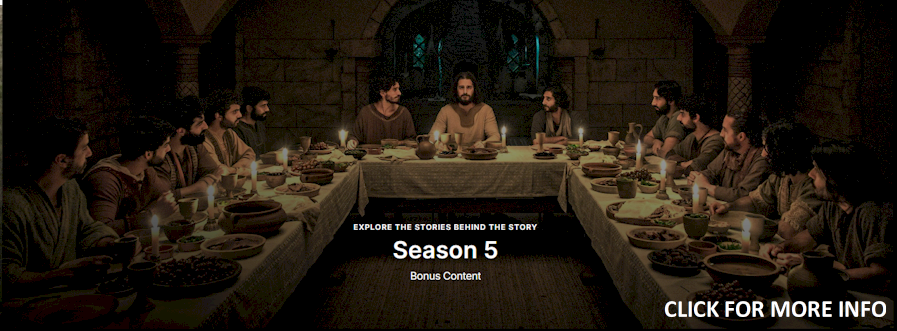
The immensely popular series “The Chosen” has depicted the late-life gospel writing on a couple of occasions. The important thing, I think, is that the Apostles spent a whole year[GN] with Yeshua,[13] following him all over Israel, listening to His teaching and watching His walk. After His ascension they spent the rest of their lives doing their very best to emulate His work of spreading the message throughout the land of Israel (and beyond), confirming their words through “signs and wonders” as the Spirit empowered them. When they finally wrote their gospel accounts they were informed not only by His life and teaching, but also by their own lives and ministry.
The Language of the Gospels
I believe the Gospels, indeed all of the Apostolic Writings, were originally written in Hebrew then immediately either rewritten or translated, either by the original penman or his trusted scribe, into Koine Greek for transmission to the Greek-speaking Messianic Believers in the Diaspora.
I also believe that, beginning as early as the end of the first century, the anti-Semitic bias of the Gentile members of the Messianic Community had created a concerted effort to destroy everything “Jewish” about their religion, and that by the end of the second century (certainly not later than the end of the third century) they had been successful in destroying all the Hebrew copies of the Apostolic Writings they could find. I am hopeful that some day archeology will discover one or more readable copies of those Hebrew manuscripts and codices.[14]
For a more thorough discussion, see “Were the Apostolic Scriptures Written in Hebrew.” I am far from alone in that position. See “Scholars Who Support a Hebrew Origin for the Apostolic Scriptures.”
… To be continued?? …
1. The Greek word euangelion is the word from which English derives evangelist, one who delivers good news. [BACK]
2. `Olam hazeh = the world which is; `olam haba = the world to come. The 'Olam Haba begins with the termination of one’s earthly life and continues on past the destruction and reconstruction of this world into eternity. (2Pet 3:10-13; Rev 21:1-2; see also Six Major Epochs of the Future) [BACK]
3. Rabbi Sha'ul of Tarsus, a.k.a the Apostle Paul. In his letters he frequently refers to what he calls “my gospel.” He is referring to the Gospel message that he was teaching prior to the Jerusalem Council, that non-Jews can become citizens of the Kingdom of God and the Commonwealth of Israel without formally converting to Judaism. In Acts 15, he presents this idea to the Messianic Beit Din in Jerusalem, which endorses his message. [BACK]
4. Go HERE for a summary and timeline. [BACK]
5. Only since the last quarter of the 20th century have the northern tribes begun to be identified and returned to the renewed independent nation of Israel. Officials in Israel now confirm that the remnant of all 12 tribes have been identified, and many members of each tribe now are living in Eretz Yisrael [the Land of Israel]. [BACK]
6. Empires that have ruled the Lands of Israel and Judah since the fall of Judah to Babylon: [SOURCE]
- 586–539 BCE: Babylonian Empire
- 539–332 BCE: Persian Empire
- 332–305 BCE: Empire of Alexander the Great
- 305–198 BCE: Ptolemaics
- 198–141 BCE: Seleucids
- 141–37 BCE: The Hasmonean kingdom in Israel established by the Maccabees, after 63 BCE under Roman supremacy
- 37 BCE–70 CE: Herodian Dynasty ruling Judea under Roman supremacy (37 BCE-6 CE and 41-44 CE), interchanging with direct Roman rule (6-41 CE and 44-66 CE). This ended in the first Jewish Revolt of 66-73 AD, which saw the Temple destroyed in 70 CE.
- 6 CE Census of Quirinius and establishment of Roman Iudaea Province
- 70–395: province of Roman Empire first called Judea, after 135 called Palaestina.[10] In 395 the Roman Empire is split into a Western and an Eastern part.
- 395–638: Eastern Roman or Byzantine Empire
- 638–1099: Arab Caliphates and subject rulers
- 1099–1187: Crusader states, most notably the Kingdom of Jerusalem
- 1187–1260: dominated by the Ayyubids of Egypt and Damascus
- 1260–1516: dominated by the Mamluks of Egypt
- 1516–1917: Ottoman Turks, having previously conquered the Byzantine Empire in 1453
- 1918–1948: British mandate of “Palestine” under, first, League of Nations, then, successor United Nations; the Emirate of Trans-Jordan was separated from the rest of Palestine in 1922, and the Hashemite Kingdom of Jordan became independent upon the expiration of the League of Nations Mandate in 1946.
- May 1948 to present: independent State of Israel [BACK]
7. When Israel captured Jerusalem during the 6-Day War of 1967, the eternal capital city was in Israelite hands for the first time since Rome destroyed the city in 70 CE and sent all Israel into the diaspora. For the first time in nearly 2,000 years, the city was no longer downtrodden by Gentiles. Can it be that this event marked the end of the “Time of the Gentiles”? [BACK]
8. I have searched diligently for years, and I was truly surprised and somewhat disappointed to discover that I cannot find anywhere in the Bible where it is clearly taught that anyone “goes to heaven” when they die. Yes, Yeshua said He was going to prepare a place for His redeemed so they may be with Him. Yes, Yeshua told the thief on the cross, “Today you will be with me in Paradise.” But Yeshua spoke Hebrew, not Greek, and what He literally told the thief was that he would be with Him in “Gan Eden,” which literally translates from Hebrew as “Garden of Eden.” In Hebrew theology Gan Eden refers to either (a) the 'Olam Haba, or (b) “Abraham’s Bosom,” referring to that area of Sheol [the Land of the Dead, not “hell” as commonly interpreted] where the righteous dead await their bodily resurrection into the `Olam Haba. “Gan Eden” is generally translated into English as “Paradise,” since Jewish theology speaks very little about “life after death” (See Luke 16:19-31 for Yeshua’s teaching on this subject.) I don’t know for certain if He was speaking literally or figuratively, but under the circumstances I must assume He was speaking literally. He did not say the thief would be with Him in “heaven.”
Yes, Rav Sha'ul taught that “to be absent from the body is to be present with the Lord,” but he doesn’t say where that is and he doesn’t call that place “heaven.” What Yeshua did clearly teach, however, was that the redeemed could have eternal life in the Kingdom, and He will soon establish that Kingdom here on earth. Having spent the first 55 or so years of my life in the Gentile Church, it has always been my distinct impression that most of the Church teaches that heaven is a purely spiritual realm somewhere “in the sweet bye-and-bye.” If the eternal state is a spiritual realm — whether called Gan Eden, Paradise, Heaven, or the 'Olam Habah — what is the point of a bodily resurrection? See “Heaven or the Kingdom?” and “Is ‘Heaven’ for Real?” [BACK]
9. All the time I was growing up in the Gentile Church I was taught that the letter to the Galatians was a scathing rebuke of those terrible “Judaizers” who were trying to coerce liberated Christians to return to the oppression of “the Law” which, as everyone plainly knows, was “abolished by Jesus and nailed to His cross.” When I spent nine years in Seminary earning two master's degree and two doctorates, that concept was strongly reinforced. It is by far the prevalent concept throughout Christianity. But, it is wrong! When correctly interpreted, the letter to the Galatians is a reprimand directed against those who would force the Goyim (Gentiles) who were coming to follow Messiah to undergo circumcision and formal conversion to Judaism in order to be “saved.” Rav Shaul’s (Paul’s) primary argument is absolutely not that one should reject Torah, but rather only the issue of “circumcision for salvation.” If you have forgotten what Yeshua actually taught about the mitzvot (commandments) of Torah, read Matthew 5:19. [BACK]
10. In all of history, there has never been a political entity named “Palestine” or an ethnicity called “Palestinian.” After the second Jewish revolt under Bar Cochba (132-135 CE) it is said the Roman emperor Hadrian renamed the land of Israel and Judea as Syria Palastina (“Syrian Palestine”) or Palastina Maritima (“Palestine by the Sea”) after the ancient enemies of the Jews - the Philistines. Because of his hatred of the Jews, it was meant to be an insult to dishonor them and remove their history in their Covenant Land. After the State of Israel was restored in 1948, the Arabs living in Israel became determed to eradicate the Jewish state. Yasser Arafat (an Egyptian) proudly announced that his approach was one of the “salami” variety. That means that the idea of destroying the Jewish state was via stages. At first, there would be a small Arab state within the Land of Israel. Then, they would demand a larger swath of land, and then they would fight to make the State of Israel smaller and smaller. This way they would have an effective platform to destroy the State of Israel from within. In order to have an Arab state within the State of Israel, Arafat came up with a brilliant marketing plan. He decided to claim that the Arabs were the indigenous people. They coined the term – “Palestinians” – and adopted the term as their essence. (Sources: “History Proves There Are No Palestinian People” and “From Where Did the Name Palestine Really Originate?”)
“According to Palestinian historian Muhammad Y. Muslih, during the entire 400 year period of Ottoman rule (1517-1918), before the British set up the 30-year-long Palestine Mandate, ‘There was no political unit known as Palestine.’” (“The Invention of the Palestinian People”) [BACK]
11. What Rav Sha'ul refers to as “my Gospel” is carefully laid out in his letter to the group of Messianic Communities that he had established in the region of Galatia, and is very likely the first of the Apostolic Letters to be written. [BACK]
12. Watch the section of this video about “the Sinner’s Prayer.” [BACK]
13. Please refer to the note on John 6:4 for the origin of a three and one-half year ministry of Yeshua. [BACK]
14. In my bibliography please see Nehemiah Gordon’s The Hebrew Yeshua vs. the Greek Jesus and George Howard’s The Hebrew Gospel of Matthew. [BACK]
|
 |
Subscribe to my Substack/newsletter |

ANXIOUSLY WATCHING FOR MASHIACH’S RETURN,
SPEEDILY AND IN OUR DAY. MARANA, TA!


